
DNA: Nature's Binary Code - The Digital Language of Life

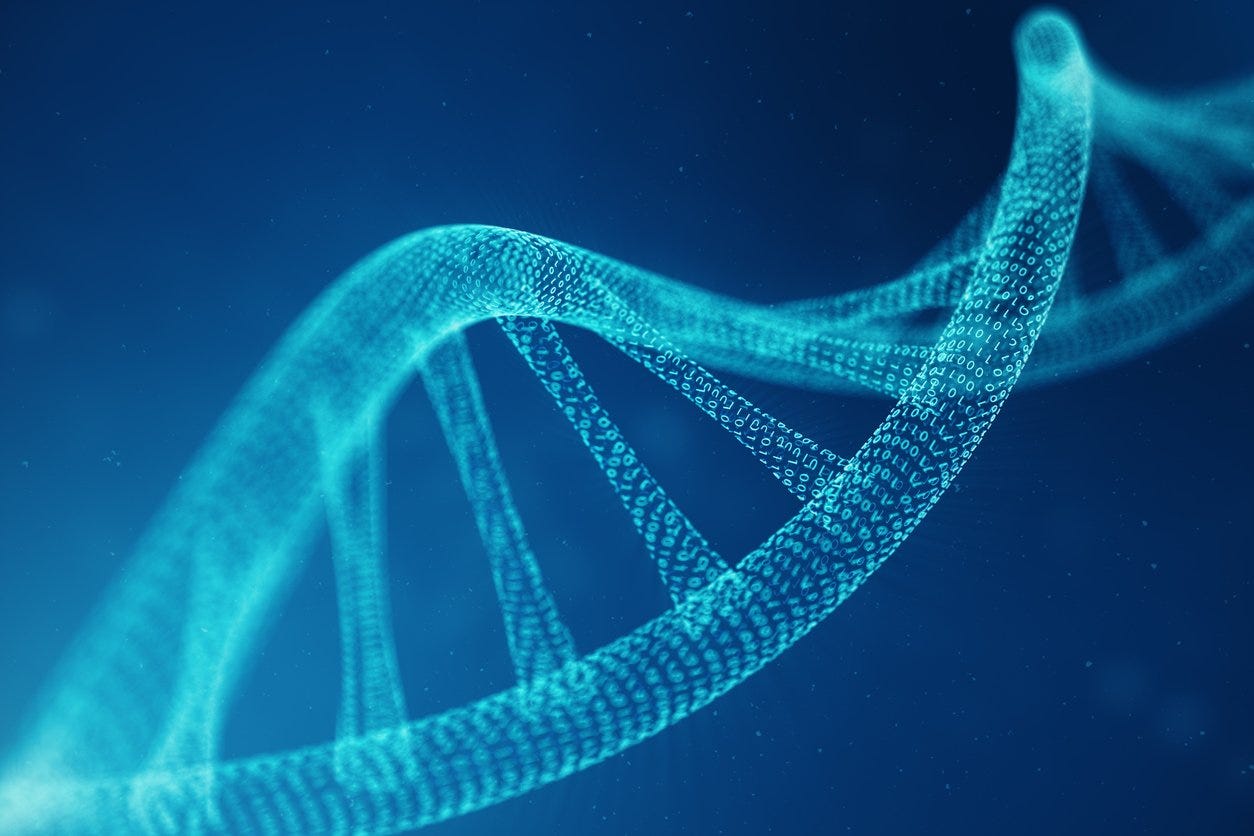
Deep within every cell of every living organism lies a remarkable information storage system that bears a striking resemblance to our modern digital computers. DNA (Deoxyribonucleic Acid), the molecule that carries our genetic instructions, can be viewed as nature's own binary code – a sophisticated programming language that has been running life's processes for billions of years.
The Binary Nature of DNA
Just as computers use a binary system of 0s and 1s to store and process information, DNA employs four nucleotide bases – Adenine (A), Thymine (T), Guanine (G), and Cytosine (C) – to encode genetic information. While this might initially appear to be a quaternary rather than binary system, the base pairing rules of DNA create a fundamentally binary structure:
- A always pairs with T
- G always pairs with C
This strict pairing system effectively creates two bits of information, making DNA a biological implementation of binary code. The double helix structure of DNA ensures that these pairs remain stable and reliable, much like the robust storage systems in our computers.
Data Storage Capacity
The efficiency of DNA as a storage medium is astounding. Consider these facts:
A single gram of DNA can theoretically store up to 215 petabytes (215 million gigabytes) of information. For perspective, this would be equivalent to storing about 50 million 4K movies in a volume smaller than a sugar cube. This incredible density makes DNA one of the most efficient storage mediums known to science.
Error Correction and Data Integrity
Like modern digital systems, DNA includes sophisticated error-correction mechanisms. The complementary strands of the double helix serve as backup copies of each other, allowing cells to detect and repair damaged sequences. This is remarkably similar to the redundancy and error-checking mechanisms used in computer storage systems.
From Nature to Technology
Scientists are now exploring ways to harness DNA's binary properties for data storage applications. Several breakthrough experiments have demonstrated the feasibility of encoding various types of digital data – from text and images to entire operating systems – into synthetic DNA sequences.
The advantages of DNA data storage include:
- Extraordinary data density
- Potential longevity (DNA can remain stable for thousands of years under proper conditions)
- Zero energy consumption for storage
- Natural redundancy and error correction
Looking to the Future
As we face increasing demands for data storage capacity, DNA's binary system offers a glimpse into potential solutions. While current DNA synthesis and sequencing technologies are still too expensive for widespread commercial use, ongoing research and development could make DNA data storage a practical reality within the next decade.
Conclusion
The parallel between DNA's information storage mechanism and computer binary code is more than just a fascinating coincidence – it's a testament to the efficiency of binary systems in storing and processing information. As we continue to push the boundaries of data storage technology, we find ourselves looking back to nature's time-tested solution: the elegant binary code of DNA.
Whether storing genetic instructions for building proteins or potentially housing our digital data in the future, DNA demonstrates that binary code isn't just a human invention – it's a fundamental language of life itself.